Most guys train their chest, arms, and shoulders religiously, but completely forget about their forearms. Then they wonder why their arms look unfinished or why their grip gives out before their muscles do.
The good news is you do not need to add a two-hour forearm session to your week. A few smart changes to how you already train can make a real difference.
Here are 10 tips that actually work.
1. Stop Using Straps for Everything
Lifting straps have their place, but if you reach for them on every pulling exercise, your forearms never get challenged.
Ditch the straps on lighter sets and let your grip do the work. Deadlifts, rows, and pull-downs all become forearm exercises the moment you remove the straps.
2. Add Wrist Curls at the End of Your Session
Wrist curls are simple and brutally effective. Sit on a bench, rest your forearms on your thighs, and curl a barbell or dumbbell using only your wrists. Do both the flexion and extension versions.
Three sets of 15 to 20 reps at the end of arm day is all you need. The muscle soreness the next day will tell you everything.
3. Use a Forearm Trainer for Daily Work
A forearm trainer, also called a grip strengthener, is one of the most underrated tools in fitness.
It is a small spring-loaded device you can squeeze repeatedly to build forearm endurance. The best part is you can use it anywhere. Watching TV, sitting at your desk, riding in a car.
Five to ten minutes of daily use adds up fast, and the results show up both in size and in how long you can hold on during heavy lifts.
4. Train Your Grip with Thick Bar Work
Thick bars force your hands and forearms to work much harder than a standard barbell.
You slip them onto any bar or dumbbell and instantly increase the diameter. Your forearms will fatigue faster at first, but they will adapt and grow.
5. Do Farmer Carries
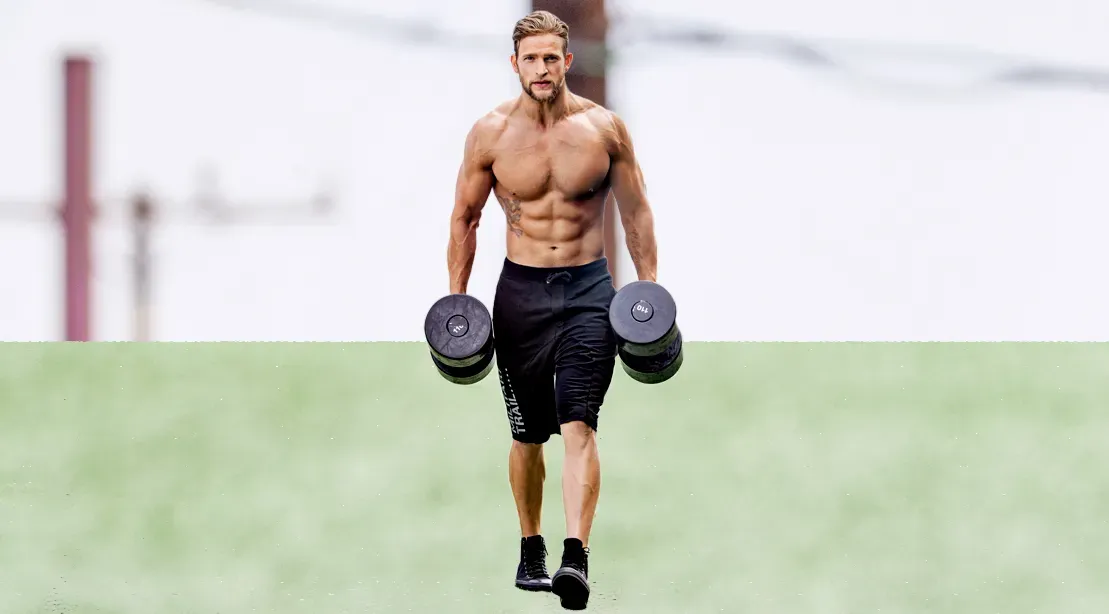
Farmer carries are one of the best full-body exercises you can do, and they hammer the forearms without any isolation work needed.
Grab two heavy dumbbells or kettlebells, hold them at your sides, and walk. Your grip, forearms, traps, and core all work together. Start with 3 sets of 20 to 30 metres and increase the weight over time.
6. Hold the Squeeze at the Top of Curls
During any curl variation, hold the contracted position for one to two seconds at the top instead of swinging straight back down.
This small change keeps tension on the forearm flexors longer and improves the mind-muscle connection. It also forces you to use a weight you can actually control, which leads to better results anyway.
7. Try Hammer Curls More Often
Most people default to supinated curls, but hammer curls with a neutral grip target the brachioradialis, which is the big muscle that runs along the top of your forearm.
It is a major contributor to forearm size. Swap one of your regular curl sets for hammer curls in each arm session, and you will notice the difference within a few weeks.
8. Hang from a Pull-Up Bar
Dead hangs are one of the simplest forearm exercises you can add to any workout. Jump up, grab the bar with both hands, and just hang. Aim for 30 to 60 seconds per set.
Beyond forearm endurance, this also decompresses the spine and improves shoulder health. It is one of those rare exercises that costs you nothing and gives you a lot.
9. Include Reverse Curls in Your Arm Training
Reverse curls, where you curl with your palms facing down, directly target the extensor muscles on the top of your forearm.
Most people completely skip these, which is why the top of their forearm looks underdeveloped compared to the bottom. Two to three sets of reverse curls once a week fills in that gap quickly.
10. Be Consistent and Patient
Forearms are a stubborn muscle group. They get a lot of indirect stimulation from everyday activity, which means they are already conditioned to some degree before you even start training them.
That is actually a good thing long term because once they do respond, they hold their size well.
The key is showing up consistently. A few targeted sets two to three times a week beats one massive forearm session every two weeks.
Final Thoughts
You do not need to overhaul your entire training program to build bigger forearms. Most of these tips slot into what you are already doing.
Drop the straps more often, grab a forearm trainer for off-gym days, add wrist curls and reverse curls at the end of your session, and stay consistent.
Forearms that match your upper arms do not just look better. They make you stronger across every lift you do.

लिहिलेले